
HOW MINDFULNESS ACTUALLY WORKS AND HOW TO PRACTICE IT DAILY
When life’s gets difficult, cultivating mindfulness becomes our anchor. In this week’s article, we’ll talk about the essence of mindfulness and explore ways incorporate it into your daily routine.
Table of Contents
ToggleFirst, what is mindfulness?
Mindfulness is the art of being fully present. It involves consciously acknowledging and accepting your thoughts, feelings, and sensations without judgment. The core is simple – being in the now. It’s not about erasing stress but changing your relationship with it.
Begin with a daily mindfulness meditation. Find a quiet space, focus on your breath, and gently bring your attention back when distractions arise. As you make this a habit, you’ll find yourself more attuned to the present, fostering a sense of calm and clarity.
Use the following list of mindful practices as a guide, an inspiration for your own journey to a healthier and happier life.
21 mindful practices to incorporate to your daily routine
These practices provide a toolkit to bring you back to the present moment, fostering resilience and clarity when you’re feeling off:
- List three things you’re grateful for each morning
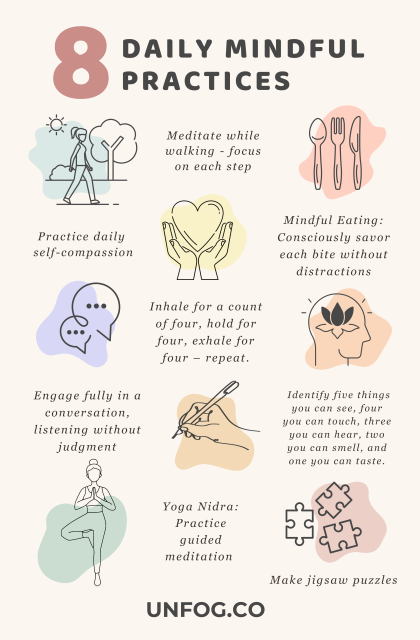
- Inhale for a count of four, hold for four, exhale for four – repeat
- Go on nature walks: Take a stroll, absorbing the sights, sounds, and smells around you
- Do a digital detox: Disconnect from screens for an hour per day
- Mindful Eating: Consciously savor each bite without distractions
- Body Scan Meditation: Mentally scan your body, releasing tension as you breathe
- Journaling: Write down your thoughts and feelings, promoting self-reflection
- Use an app that tracks your daily meditation sessions
- Positive Affirmations: Repeat affirmations that resonate with you
- Unplug Meditation: Find a quiet spot, close your eyes, and unplug from the world
- Make puzzles: Puzzles are a mindfulness practice that is great to sharpen the mind
- Gratitude Letter: Write a letter expressing gratitude to someone who positively impacted your life
- Mindful Stretching: Incorporate gentle stretches with mindful breathing
- Practice self-compassion: Anxiety can fill you with self-doubt and make you upset with yourself. Let go of what your inner critic says and flood your mind with uplifting thoughts
- Music Therapy: Music can be a great entry point to meditation. You can ask yourself: How does it feel in my body as I listen?
- Random Acts of Kindness: Perform a small act of kindness without expecting anything in return
- Meditate while walking; The plus side is that you can do it almost anywhere
- Five Senses Check: Identify five things you can see, four you can touch, three you can hear, two you can smell, and one you can taste
- Conscious Listening: Engage fully in a conversation, listening without judgment or forming responses
- Gratitude Jar: Fill a jar with notes of gratitude throughout the year, and read them during challenging times
- Yoga Nidra: Practice a guided meditation for deep relaxation and rejuvenation
SAVE THIS REMINDER FOR LATER ON PINTEREST !
Are there any negative effects to this practice?
While mindfulness has gain reputation for its positive impact on mental well-being, it’s essential to navigate its realm with a nuanced understanding, acknowledging that, like any practice, it might not be a one-size-fits-all solution.
As this practice surges in popularity, there’s a growing concern about its portrayal as a panacea for various mental health conditions, potentially overlooking its limitations.
Mindfulness is not a miracle cure. It’s crucial to recognize that it should be seen as a component of a holistic approach to well-being rather than a standalone remedy.
Similar to engaging in regular exercise or maintaining a balanced diet, mindfulness requires consistency and a long-term commitment. Expecting immediate results might lead to disappointment, as mindfulness is a journey, not a destination.
Moreover, as the popularity of this practice rises, there’s a risk of it being commodified and oversimplified by the media. The danger lies in turning mindfulness into a quick-fix solution for complex issues such as depression and anxiety. Individuals should approach mindfulness as a valuable tool within a broader framework of self-care practices, complementing professional guidance when needed.
While the positive impacts of mindfulness are well-documented, there remains a gap in our understanding of its potential drawbacks. Some individuals have reported adverse effects, such as heightened anxiety, psychosis, or insomnia. Though these cases are not widespread, they emphasize the importance of an individualized approach to mindfulness.
What works positively for one person might not be suitable for another.
How to incorporate mindfulness into your daily routine?
Start your day mindfully: Begin your morning with intention. As you wake up, take a moment to express gratitude for a new day. Engage in a mindful breathing exercise to set a positive tone for the hours ahead.
Begin with mindful moments during routine activities. When brushing your teeth, feel the bristles against your gums, smell the toothpaste, and appreciate the sensation.
Transform routine activities into opportunities for mindfulness. Whether it’s brushing your teeth, having a meal, or making coffee, pay attention to the sensory experience.
By infusing mindfulness into daily activities, you turn the mundane into moments of presence, fostering a continual state of awareness.
The Final Word
In the wide range of well-being practices, mindfulness emerges as a captivating one, offering profound benefits yet demanding thoughtful consideration.
By understanding its nuances and integrating it into a broader well-being strategy, we unlock the true transformative potential of this practice – a compass guiding us toward a more mindful, balanced existence.
May your journey be enriched by mindfulness.
Thank you for being here and see you in the next one! 🫶